I recently ventured out to the
Morris Arboretum, located outside of Philadelphia, PA. I had heard about the garden for years but never had a chance to visit. Like many of the gardens that I have been to, the Morris Arboretum has a rich cultural, horticultural, and architectural
history. Originally owned and developed by John and Lydia Morris as a summer home in the late 1800's, the property became part of the University of Pennsylvania in 1932. The gardens offer an amazing research opportunity in the history of landscape architecture and design, and the arboretum website has wonderful
archives with photos and paperwork on the history of the property.
Gardens are a form of a living history, with the ability to transport us back in time. They are constantly changing and adapting, however they show that the vision and work of human beings can leave an imprint on the landscape.
The gardens here are very well cared for, and provide the perfect balance between historical and contemporary elements.
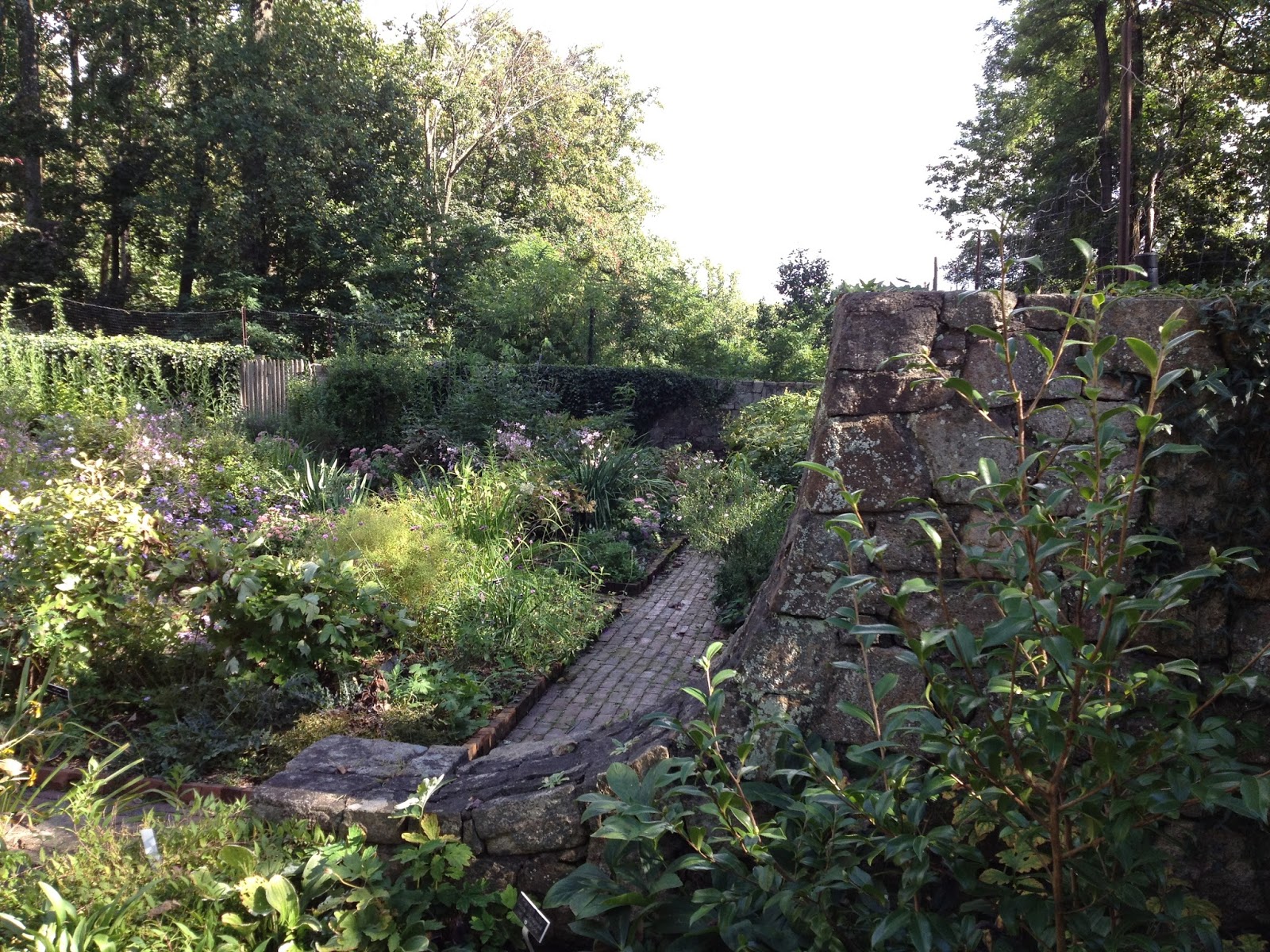
The rose garden offered a colorful and painterly array of perenials paired with an English country style stone wall. The plants that were growing out of the stone wall, softened the architectural details.
Though much of the surrounding landscape had grown in, I was surprised to learn that this wall appeared almost the same way in the early 1900's archives.
The garden in this are felt different than other gardens that I have visited. There was a wild element to it, yet everything was deliberately placed, and well manicured. This was the perfect time of year to visit with everything in full bloom, providing a variety of colors and textures at every vantage point.
As I continued on, I began noticing some of the more formal stone elements. These established a striking contrast between the more natural growth within the flower beds, and the surrounding trees and shrubs.
There were also some interesting little botanical discoveries to be found.
And something that I have never seen in a garden before...A garden railway! Model trains, on an elaborate system of tracks, traveled about in their own little worlds, up mountains, through covered bridges, around the Eiffel Tower, and the Leaning Tower of Pisa. The movement of these little trains was mesmerizing as they traveled throughout landscape lined with Japanese Maple trees, Bleeding Hearts, and waterfalls, the sounds of railroad cars echoing from other areas of the garden.
Moving on from the little trains, I took a turn through a vine covered arch, and discovered a fountain which led me to the Pennock Flower Walk.
Walking up the hillside past the marble fountain and sundial, I was intrigued by what looked like an old terracotta wall nestled in a shady secluded spot. This was once the spot of the summerhouse in the early 1900's and the area was described as the Italian Villa Garden. There was a trickling stone fountain, Italian style Urns, and a quiet spot to sit and gaze out at the striking view of the grounds. This was where the landscape design truly became apparent.
From that spot, I made my way to the swan pond, and English Park. Surprise architectural elements could be discovered all around the expansive grounds each with its own unique character.
Seven Arches, located at the edge of the garden, once pumped an elaborate system of water throughout the landscape. Now, from on top of the arches, there is a striking view of the landscape, gardens, and very grown-in location where the original house once stood.
From here, as I walked back though the park, I encountered one of the many groundhogs that seem to have developed a commune on the property. I think that this guy was suspicious of me.
I then made my way though a wooded area to the Key Fountain, and the Mercury Loggia and Grotto, both displaying a shadowy, quiet contrast to the light and open expanse of the English Park.
Finally, I made my way to the Victorian Fernery. Built in 1899 this is the only freestanding fernery remaining in North America. This was fascinating to learn about, as I have recently taken an interest in greenhouses and terrariums, and have been exploring the idea of caring for plants in constructed and controlled environments. As a bonus, the building was beautifully constructed.
In addition to the historical details of the garden, there are also some fun and hidden gems to discover.
Like Giant Toads!
And a human sized Robin's nest high above in the tree canopy!